
Now Reading: World Television Day: The Timeless Power of Storytelling Through Screens
- 01
World Television Day: The Timeless Power of Storytelling Through Screens

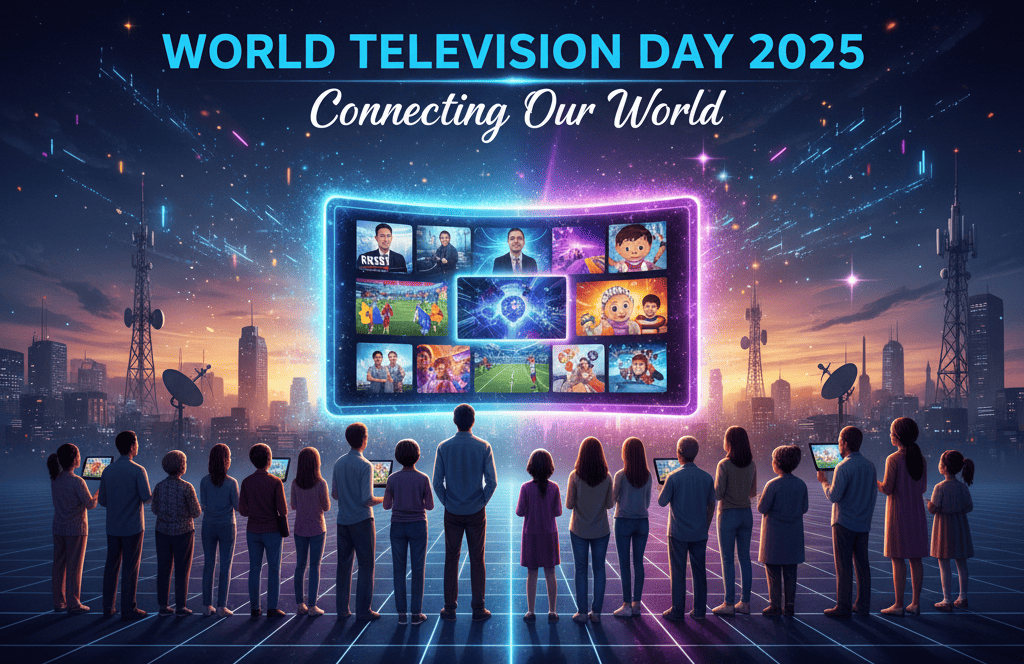
World Television Day – Celebrating a Medium That Changed the World
Every year on November 21, the world honors a medium that brought nations closer, delivered unforgettable moments, and became a constant companion in our homes — television.
World Television Day, recognized by the United Nations, is not just about celebrating a device. It’s about appreciating the impact of televised communication on societies, cultures, education, and global awareness.
Even with smartphones and OTT dominating screen-time today, television still stands tall as one of the most trusted and powerful platforms for information and entertainment. This blog explores the history, evolution, and everlasting influence of television — and why it continues to matter.
Why the United Nations Declared World Television Day
In 1996, the UN held the first World Television Forum, where global media leaders emphasized the growing influence of television in:
Public opinion
Cultural development
Peace and diplomacy
Education
Emergency communication
Recognizing this powerful role, the UN officially declared World Television Day on November 21.
It’s Not About the Device — It’s About the Impact
The day celebrates:
The stories television tells
The awareness it spreads
The connections it builds
The knowledge it imparts
Television has shaped generations — and continues to do so.
A Journey Through Time – How Television Evolved
Television has transformed dramatically over the decades. Each era added something new to the viewing experience.
1. The Black-and-White Beginning (1920s–1950s)
The earliest televisions were simple and experimental, but they revolutionized how people consumed news and entertainment.
2. The Arrival of Color TV (1960s–1980s)
Color television changed the game. Suddenly, sports, movies, and concerts became more immersive.
3. Cable & Satellite Explosion (1990s)
The 90s introduced hundreds of channels — music, news, sports, kids’ shows, and entertainment networks.
4. The Digital Upgrade (2000s–2010s)
High-definition screens, LCD/LED panels, and digital broadcasting took quality to a new level.
5. Smart TV Era (2010s–Present)
Today, televisions are smarter than ever, offering:
OTT apps
Voice commands
AI recommendations
4K/8K clarity
Television didn't get replaced — it adapted.
Why Television Still Matters in Today’s Digital World
Despite mobile phones and laptops taking over daily consumption, television remains the most reliable mass communication tool.
Trusted Source for News
Audiences still consider televised news authentic and credible, unlike social media which often spreads misinformation.
Massive Reach — Even Where Internet Fails
Television is accessible in:
Rural areas
Developing nations
Low-internet regions
This makes it a vital link between governments and the public.
A Shared Social Experience
Unlike mobile viewing, TV still brings families together for:
Cricket matches
Reality shows
Movies
Festivals
Award functions
It's the last collective entertainment experience we have.
A Powerful Educational Tool
From science to history, kids’ learning to documentary storytelling—television has educated millions.
The Social & Cultural Influence of Television
Television has shaped society in countless ways.
Awareness & Social Change
Campaigns about health, equality, women empowerment, and environmental protection reach millions instantly.
Strengthening Democracy
Televised debates, election coverage, and investigative journalism give citizens a clear picture of public affairs.
Economic Impact
The television industry supports millions of jobs in:
Production
Broadcasting
Advertising
Sports
Entertainment
Television vs Digital Media – Partners, Not Competitors
Television and online platforms are not opponents. They complement each other.
Television Strengths
Trustworthy
Live events
Mass reach
No fake news culture
Community viewing
Digital Strengths
On-demand
Personalized
Multi-platform
Global content access
Modern audiences enjoy both.
Why World Television Day Still Matters
Even today, this day reminds us of television’s importance:
It spreads verified information
It connects communities
It showcases diverse cultures
It supports peacebuilding through media
It entertains and educates simultaneously
World Television Day celebrates meaningful storytelling — a language every human understands.
The Future of Television — What Lies Ahead?
Television is evolving rapidly. The next decade will be even more exciting.
AI-Powered Content Suggestions
TVs will understand viewing patterns and suggest hyper-personalized shows.
Interactive Viewing
Sports with multiple camera angles, live polls, and real-time participation.
8K and Beyond
Ultra-HD clarity that makes visuals feel real.
Virtual & Augmented Reality Integration
Imagine watching a cricket match from a virtual stadium — that future isn’t far.
Television isn’t dying — it’s transforming.
Conclusion – A Medium That Continues to Inspire
World Television Day reminds us of how far we’ve come — from grainy black-and-white screens to smart TVs streaming global content.
Television continues to educate, entertain, inform, and connect humanity.
As long as stories exist, television will always have a place in our lives and hearts.
Frequently Asked Questions (FAQs)
1. What is World Television Day?
It is a global observance held on November 21 to recognize television’s role in communication and cultural development.
2. Why is World Television Day celebrated?
To acknowledge the impact of television on education, awareness, democracy, and global connection.
3. When was World Television Day established?
It was declared by the United Nations in 1996.
4. Is television still relevant today?
Yes. It remains one of the most trusted and widely accessible media platforms worldwide.
5. How has television evolved over time?
It evolved from black-and-white screens to color, digital broadcasting, HD, 4K, and now AI-powered Smart TVs.
6. Will OTT replace television?
No. OTT and TV coexist — each offers unique benefits.